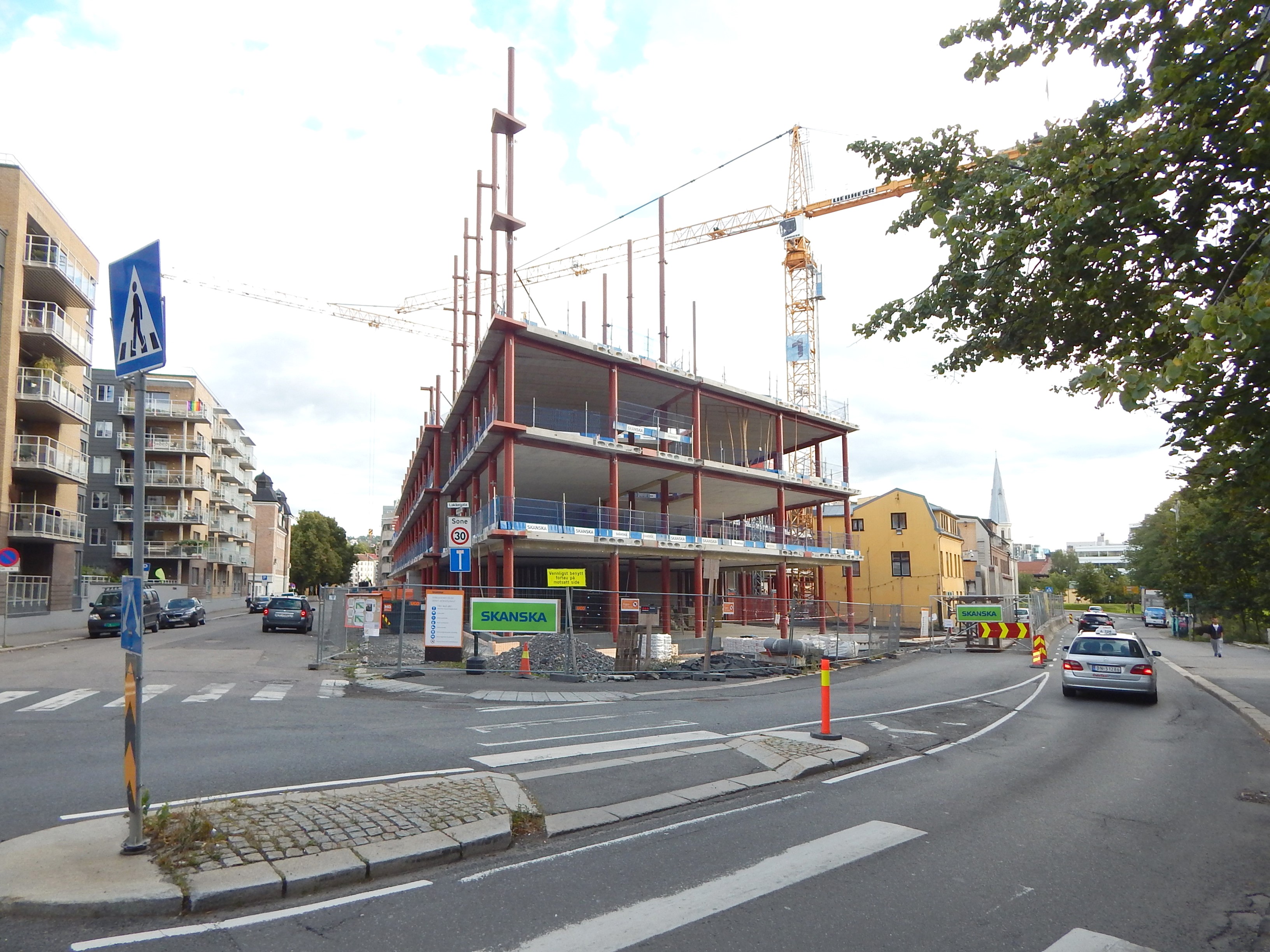
The name Wexels Plass
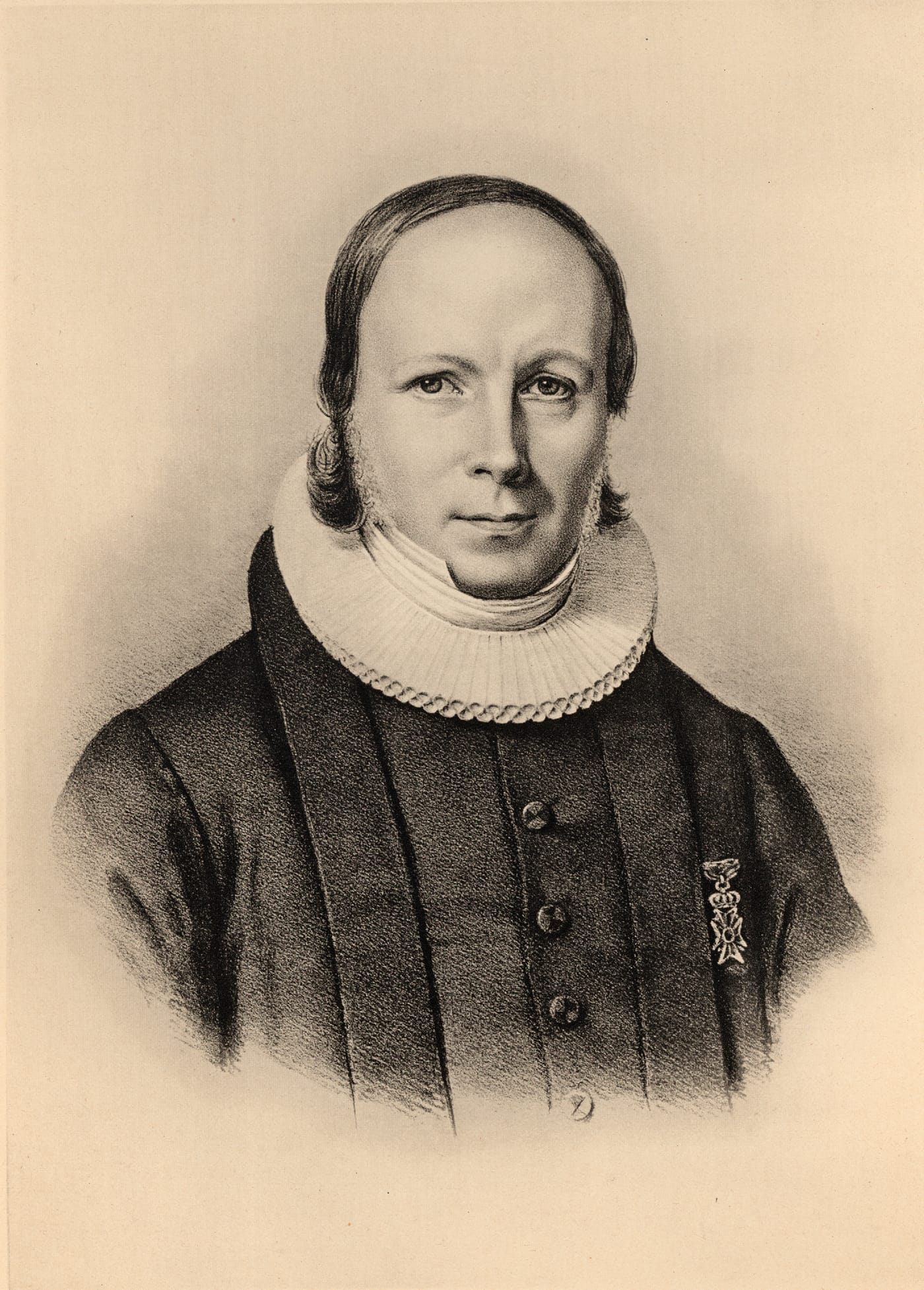
Wilhelm Andreas Wexels (1797–1866)
Wexels Plass is named after Wilhelm Andreas Wexels, a Danish-born Norwegian priest and author. He served as resident curate at Vår Frelsers kirke — today’s Oslo Cathedral — and is considered one of Norway’s foremost Grundtvigians.
Wexels is best known for the first Norwegian translation of the summer hymn “Den blomstertid nå kommer” (“The time of bloom now comes”) and his contribution to The Revised Explanation, a modernization of Pontoppidan’s catechism explanation. A memorial to him stands outside Oslo Cathedral, and the intersection was named after him in 1934.
From office building to homes
The 14-story tower at Herslebs gate 19, nicknamed “brunosten” (“the brown cheese”) by locals, previously housed municipal offices — including the School Board. The surrounding area consisted of older small-scale industry, vacant land, and a parking lot.
In 2002, Oslo Municipality sold the property to the investment group Wexels Plass AS, which developed the area into housing. The tower was preserved and integrated into the new residential quarter.
Wexels Plass today
Today, Wexels Plass is a modern residential quarter consisting of six blocks with a total of 284 apartments. The buildings are located between Lakkegata, Herslebs gate, and Heimdalsgata, with addresses at Herslebs gate 17–25.
The complex also includes underground parking and a grocery store on the ground floor. The apartments are organized into several condominium associations managed by OBOS.
The actual square is no longer signposted, and the intersection has no widening compared to a regular street crossing. The name lives on through the residential quarter.
Timeline
Wilhelm Andreas Wexels is born in Copenhagen
Wexels dies; memorial erected outside Oslo Cathedral
The intersection is named W.A. Wexels’ plass
The high-rise (“brunosten”) is built as a municipal office building
Oslo Municipality sells the property
HK Arkitekter wins the limited architecture competition
First construction phase completed
The entire complex is completed